


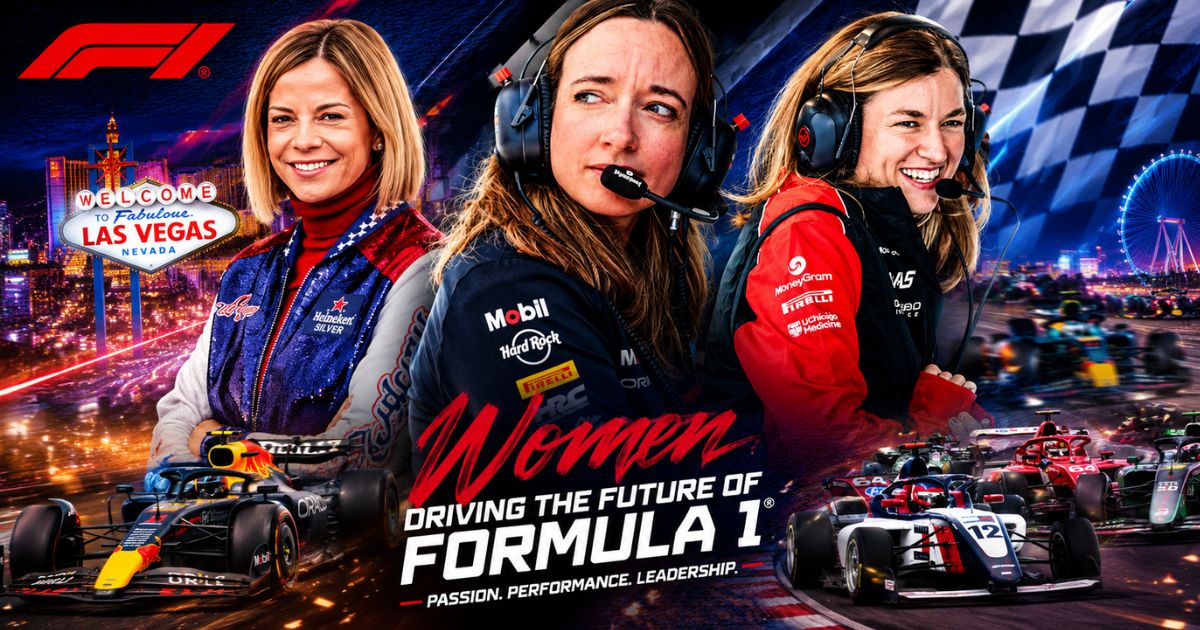
For decades, Formula 1 stood as one of the most male-dominated arenas in professional sports. While women have long participated in motorsport as drivers, engineers and executives, their representation within Formula 1 itself remained limited. In recent years, however, the sport has begun to see measurable change, with new development pathways, increased corporate investment and a growing global fan base helping women gain visibility both on and off the track.
F1 Pathways
One of the most significant developments is the creation of the F1 Academy, an all-female racing championship launched in 2023 to develop young drivers and provide a clear pathway to higher levels of motorsport. The series was designed to address one of racing’s most persistent challenges: access to funding and early-career opportunities.
Managed by former racing driver Susie Wolff, pictured above left, the program focuses on identifying promising talent and providing consistent track time in a competitive environment. Beginning in 2024, all 10 Formula 1 teams partnered with the series, each supporting a driver competing in the championship.
This integration with the broader Formula 1 ecosystem has increased visibility while allowing drivers to gain experience during major race weekends. The grid has also expanded to include more competitors, with wild-card entries introduced at select races to broaden access and exposure. While still relatively new, the series has already seen drivers progress into higher racing categories, reinforcing its role as a potential pipeline to Formula 3, Formula 2 and, ultimately, Formula 1.
Technical Roles
Progress is also taking place behind the scenes, as women are increasingly stepping into leadership roles within teams, particularly in technical positions that directly influence race outcomes. Hannah Schmitz, pictured above middle, chief strategist for Red Bull Racing, is one of the most visible examples.
Race strategists make real-time decisions on pit stops, tire strategy and race tactics, often determining the outcome of a race within seconds. Schmitz has contributed to multiple championship-winning campaigns, highlighting the growing influence of women in the analytical and strategic side of the sport.
Another milestone came with Laura Mueller, pictured above right, who became the first full-time female race engineer in Formula 1 with Haas. Race engineers serve as the primary communication link between driver and team, translating complex data into immediate decisions that impact performance. These roles reflect a broader shift as teams place greater emphasis on attracting top talent from diverse technical backgrounds.
Corporate Backing
Corporate investment is playing a critical role in expanding opportunities, with major global brands now supporting initiatives tied to F1 Academy and broader development programs for women in motorsport. These partnerships provide funding, training resources and increased visibility for emerging drivers, addressing one of the sport’s most significant barriers.
In motorsport, sponsorship is often essential for career progression, making this support especially impactful. Companies are also responding to changing audience dynamics, recognizing growing interest in women’s participation across the sport.
Fan Growth
The Formula 1 audience has evolved rapidly in recent years, with women now representing a substantial portion of the sport’s global fan base. This shift reflects broader changes in how the sport is marketed and consumed, driven by digital platforms, streaming content and international race expansion. As engagement increases, Formula 1 leadership has placed greater emphasis on initiatives that promote inclusion and broaden participation across the sport.
Future Momentum
Although Formula 1 has yet to see a woman compete full-time in the championship in the modern era, the trajectory is changing. Development programs, increased representation in technical roles and expanded corporate investment all point to a more inclusive future. Together, these efforts are helping reshape Formula 1—not only by opening doors for the next generation of drivers, but also by redefining who contributes to success in one of the world’s most advanced and competitive sports.
Read more articles for the ConnectComm Community here.