


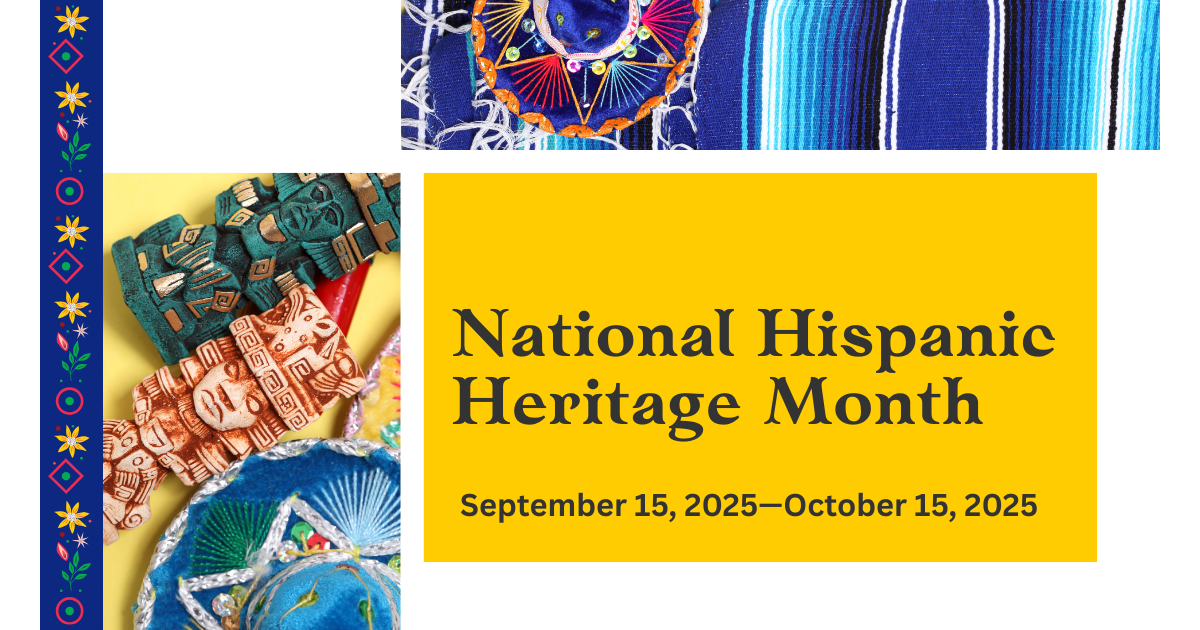
From September 15 to October 15 each year, the U.S. observes National Hispanic Heritage Month, honoring the cultures, histories and contributions of American citizens whose ancestors came from Spain, Mexico, the Caribbean and Central and South America. Officially established in 1988, the month reflects a longstanding national recognition of the vital role Hispanic Americans have played in shaping the country.
The Origins
Hispanic Heritage Month began as a weeklong celebration. In 1968, President Lyndon B. Johnson signed legislation authorizing National Hispanic Heritage Week, timed to coincide with the independence anniversaries of several Latin American countries. In 1988, Congress passed Public Law 100-402, sponsored by then-Representative Esteban Torres and later signed into law by President Ronald Reagan, expanding the observance to a whole month.
The start date, September 15, was chosen because it marks the independence of five nations—Costa Rica, El Salvador, Guatemala, Honduras and Nicaragua—which all declared independence from Spain in 1821. Mexico’s Independence Day follows on September 16, and Chile’s on September 18, making the mid-September start particularly meaningful.
Deep-Rooted Legacy
Hispanic Americans have been a part of North America’s story long before the founding of the U.S. Spanish explorers arrived in the early 1500s, with Juan Ponce de León landing in Florida in 1513 and the Spanish establishing St. Augustine, Florida—the oldest continuously inhabited European-established settlement in the continental U.S.—in 1565.
In the centuries since, Hispanic Americans have shaped every part of national life. From the battlefield to the boardroom, and from city halls to cultural landmarks, their presence has been constant. Leaders like César Chávez, co-founder of the United Farm Workers; Justice Sonia Sotomayor, the first Hispanic justice on the U.S. Supreme Court; and Roberto Clemente, a Hall of Fame baseball player and humanitarian, have left lasting marks on American history.
Key Historical Milestones
Several major events provide context to the month’s significance:
- 1513: Juan Ponce de León arrived in present-day Florida.
- 1821: Multiple Latin American countries, including Mexico and the Central American nations, gained independence from Spain.
- 1848: The Treaty of Guadalupe Hidalgo ended the Mexican-American War, ceding vast territories to the U.S. and incorporating many former Mexican citizens as Americans.
- 1968: Hispanic Heritage Week was signed into law.
- 1988: Hispanic Heritage Month was established by law.
National & Local Celebrations
Across the country, the month is observed through festivals, concerts, lectures, art exhibits and cultural showcases. Communities large and small celebrate with music—from mariachi and salsa to reggaeton and norteño—and cuisine that reflects the regional diversity of Hispanic cultures.
In many cities, Hispanic Heritage Month is celebrated with parades, heritage fairs and community days that feature food vendors, traditional dances and artisan markets. Museums and public institutions also play a central role. For instance, the Smithsonian Institution organizes a wide range of Hispanic programming during this month, including its “Latino Center Virtual Museum.”
Schools, universities and government agencies mark the month by highlighting Hispanic leaders in U.S. history, science, business, education and the military. In 2023, according to the U.S. Census Bureau, over 63 million people—or nearly 19% of the total U.S. population—identified as Hispanic or Latino.
Preservation & Promotion
Several national organizations and institutions work year-round to honor and document the Hispanic American experience:
- Smithsonian Latino Center: Now part of the National Museum of the American Latino, the center supports Latino representation across Smithsonian museums and research.
- Library of Congress: Hosts dedicated archives, exhibits and online resources that explore Hispanic culture, literature and history.
- National Park Service: Features historical sites and heritage trails that commemorate Spanish colonial settlements, missions and Hispanic contributions to U.S. history.
Congress also authorized the creation of the National Museum of the American Latino, which is currently under development and will be located on or near the National Mall in Washington, D.C.
Books & Media
To better appreciate the experiences and contributions of Hispanic Americans, readers can explore these notable works:
- The House on Mango Street by Sandra Cisneros: A classic novel exploring identity and belonging through a young Latina girl in Chicago.
- Latino Americans (PBS): A six-part documentary series detailing 500 years of Latino history in the Americas.
- Bless Me, Ultima by Rudolfo Anaya: A landmark work in Chicano literature that blends folklore and family legacy.
- ¡Latinoamérica! by Ilan Stavans: A visual journey through the culture, language and influence of the Latin American world.
Looking Ahead
Hispanic Heritage Month is more than a celebration of the past. It’s also an invitation to recognize the growing influence and leadership of Hispanic Americans in every sector—from small businesses and health care to innovation and national service.
As the country continues to evolve, so too does the role of Hispanic Americans in defining its future. Whether through education, celebration or public service, this annual observance reminds us that Hispanic heritage is not only a part of American history—it is American history.
Read more articles for the ConnectComm Community here.