


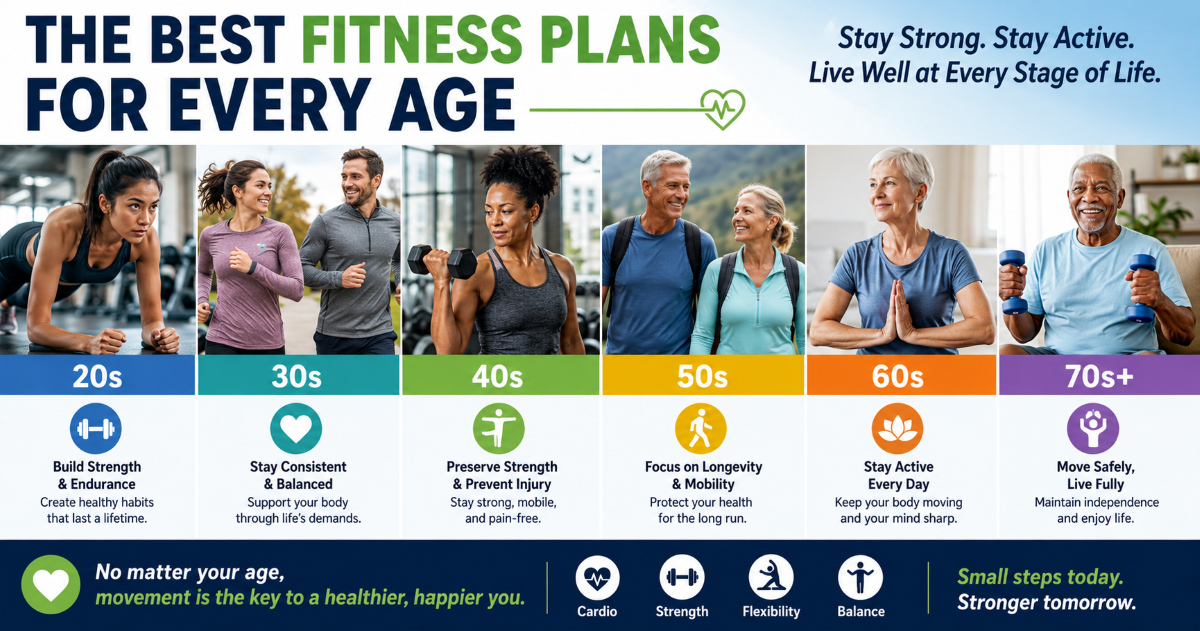
When it comes to fitness, there’s no one-size-fits-all approach. Our bodies change over time, and so should our exercise routines. The good news? Staying active at any age can improve your health, boost your energy, strengthen your mind, and help you enjoy life to the fullest.
Whether you’re just starting your fitness journey or looking to fine-tune your routine, here’s a look at the best types of exercise for every stage of life.
In Your 20s: Build a Strong Foundation
Your 20s are often when your body is at its peak in strength, endurance, and recovery. This is the perfect time to establish healthy habits that will benefit you for decades.
Focus on a balanced fitness routine that includes:
- Strength training 3-4 times per week
- Cardio such as running, cycling, swimming, or sports
- Flexibility and mobility exercises
- High-intensity interval training (HIIT) to improve endurance
This is also an excellent time to experiment with different activities—from rock climbing and martial arts to recreational sports leagues—to find what keeps you motivated.
Goal: Build muscle, strengthen bones, improve cardiovascular fitness, and create lifelong healthy habits.
In Your 30s: Balance Fitness with a Busy Life
Between careers and growing families, finding time to exercise can become challenging. Fortunately, consistency matters more than spending hours in the gym.
Aim for:
- Strength training 2-3 times weekly
- Moderate cardio for at least 150 minutes each week
- Mobility work and stretching
- Functional exercises like squats, lunges, and core training
Recovery becomes increasingly important during this decade. Prioritize sleep, hydration, and proper nutrition to help your body perform at its best.
Goal: Maintain muscle mass, manage stress, and support long-term health.
In Your 40s: Preserve Strength and Prevent Injury
As metabolism naturally begins to slow, maintaining muscle becomes increasingly important. Strength training helps support healthy joints, improve posture, and keep your metabolism working efficiently.
A well-rounded routine should include:
- Resistance training at least three days per week
- Walking, cycling, swimming, or rowing
- Core strengthening
- Yoga or Pilates to improve flexibility and balance
Don’t overlook recovery. Foam rolling, stretching, and rest days can help reduce the risk of injury and improve overall performance.
Goal: Maintain muscle, protect joints, and improve flexibility.
In Your 50s: Focus on Longevity
Fitness becomes less about appearance and more about maintaining independence and quality of life. Regular movement can help reduce the risk of heart disease, diabetes, osteoporosis, and other chronic conditions.
Excellent choices include:
- Walking or hiking
- Resistance bands and weight training
- Swimming or water aerobics
- Yoga or tai chi for balance and flexibility
- Cycling for low-impact cardiovascular exercise
Balance exercises become increasingly important to help reduce the risk of falls as you age.
Goal: Protect heart health, maintain mobility, and preserve independence.
In Your 60s: Stay Active Every Day
Many adults discover retirement provides more opportunities to focus on health. Daily movement can improve mood, cognitive function, and overall well-being.
Recommended activities include:
- Brisk walking
- Water exercise
- Light-to-moderate strength training
- Stretching and flexibility work
- Balance exercises several times each week
Don’t underestimate everyday activities like gardening, dancing, or playing with grandchildren—they all contribute to an active lifestyle.
Goal: Improve endurance, balance, and overall vitality.
In Your 70s and Beyond: Keep Moving Safely
Staying active remains one of the most powerful ways to maintain independence and reduce the risk of chronic illness.
Ideal activities include:
- Walking
- Chair exercises
- Water aerobics
- Light resistance training
- Tai chi
- Gentle yoga
It’s important to exercise at your own pace and consult your healthcare provider before beginning a new fitness program, particularly if you have existing health conditions.
Goal: Preserve mobility, reduce fall risk, maintain strength, and support cognitive health.
The Four Types of Exercise Everyone Needs
No matter your age, experts recommend including these four essential components in your weekly routine:
Aerobic Exercise
Supports heart and lung health while improving endurance. Walking, swimming, cycling, dancing, and jogging are all excellent choices.
Strength Training
Builds muscle, strengthens bones, boosts metabolism, and makes everyday activities easier. Aim for at least two sessions per week.
Flexibility
Stretching and mobility exercises help maintain range of motion, improve posture, and reduce stiffness.
Balance Training
Exercises such as tai chi, yoga, or simply standing on one leg can improve stability and help prevent falls, especially for older adults.
How Much Exercise Do You Need?
The general recommendation for healthy adults includes:
- At least 150 minutes of moderate aerobic activity each week, or 75 minutes of vigorous activity
- Strength training at least two days per week
- Daily stretching or flexibility exercises
- Balance exercises several times weekly, particularly after age 50
Remember that every bit of movement counts. Taking the stairs, walking during lunch breaks, gardening, or playing with children or grandchildren all contribute to a healthier lifestyle.
Fitness Is About Living Better
Exercise isn’t just about losing weight or building muscle—it’s about living a healthier, happier, and more independent life. Regular physical activity can improve sleep, reduce stress, sharpen memory, strengthen the immune system, and lower the risk of numerous chronic diseases.
No matter your age, it’s never too early—or too late—to become more active. Start where you are, choose activities you enjoy, and stay consistent. Small steps today can lead to significant health benefits tomorrow.
After all, the best exercise plan isn’t the most intense one—it’s the one you’ll continue doing for years to come.
Read more articles for the ConnectComm Community here.