


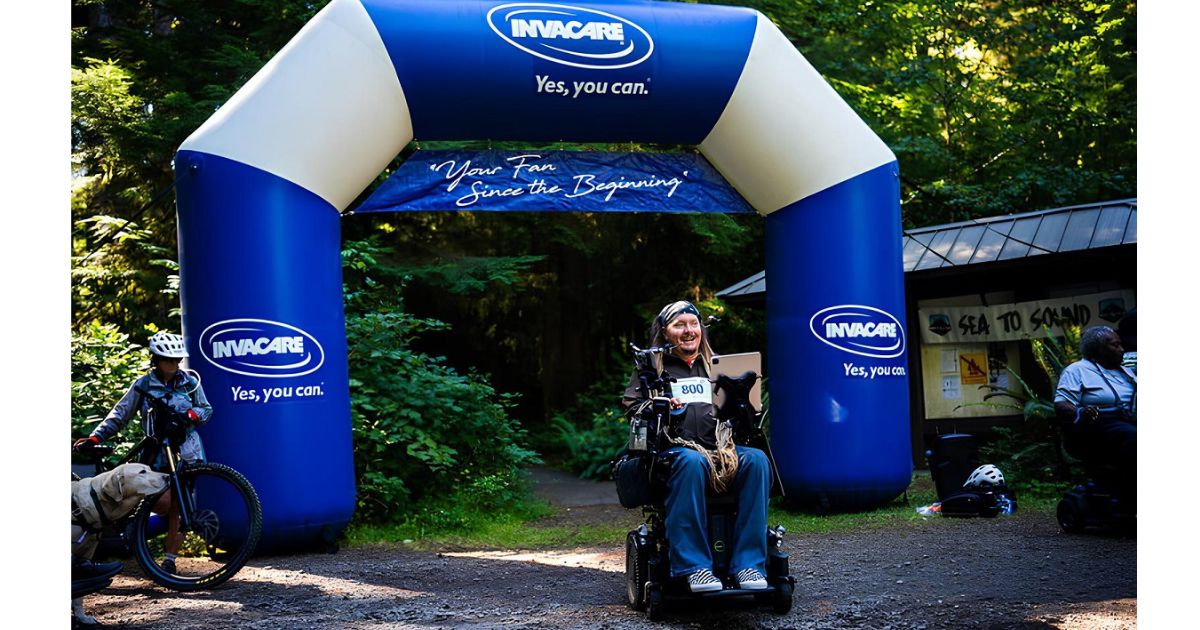
When Ian Mackay wheels into view at the annual Sea to Sound ride, he’s not just leading a journey—he’s redefining what it means to belong in the outdoors. This year, more than 150 participants from across the country joined the 70-mile ride along the Puget Sound in Washington. For Mackay, that number is more than a milestone—it’s a testament to the power of community.
“Having more than 150 riders join us this year is a huge milestone,” Mackay said. “But more than the number, this growth shows there’s a real desire for people of all abilities to join the ride, immerse themselves in nature and create community along the way.”
Breaking Barriers
That vision of inclusion has guided Mackay since he founded Ian’s Ride, a nonprofit committed to making outdoor spaces accessible for people with mobility impairments. Yet, the path toward accessibility is still full of obstacles.
“There are two main barriers,” he explained. “The first is equipment. People with disabilities need a wheelchair that can manage a dirt or bumpy surface in a somewhat smooth and dignified manner. Battery life is another concern. Often, folks who use power chairs or other battery-operated devices worry about running out of power and getting stuck, so they may be hesitant to take on a challenge like Sea to Sound.
“The second main barrier is just accessible infrastructure,” Mackay elaborated. “When designing trails in city, state or national parks, consider all community members, and don’t create barriers that would prevent a wheelchair user from enjoying the experience.”
The Power of Technology
Technology, Mackay said, has been transformative—not only for him personally, but for countless others navigating life with mobility impairments. His Invacare power wheelchair, which he operates using mouth controls, allows him to explore terrains that once seemed unreachable. Even something as simple as getting his first cellphone after his accident was life-changing.
“While it may sound ordinary—since almost everyone has a phone—for me, it was life-changing,” Mackay recalled. “Having a phone meant that I could venture out into my community without needing a caregiver or family member to be physically with me. Regaining that sense of autonomy was the turning point in my journey.”
That independence opened the door to new adventures, which ultimately grew into Sea to Sound. Mackay and his team now collaborate with tech leaders such as Apple to advance hands-free technology, pushing forward innovations that ensure curiosity and adventure remain within reach for everyone.
“Life doesn’t stop when you use a wheelchair,” Mackay said. “It may just be the start of an exciting new chapter.”
From Recovery to Rediscovery
For Mackay, that new chapter began after his spinal cord injury. Once an avid outdoorsman, he admits it took time to rediscover his passions. But encouragement from fellow spinal cord injury survivors helped him reframe his outlook.
“It took some time for me to snap out of my funk and realize that I didn’t have to give up those interests just because I was in a wheelchair,” he said. “What started as short rides ending with a daily beer with a few friends grew into longer journeys that inspired others to join in. Ian’s Ride carries that same sentiment forward: creating community, pushing for accessibility and believing that adventure belongs to everyone.”
Advice for New Adventurers
That belief drives his advice for others who may feel limited.
“My biggest piece of advice is to find a community,” he said. “Seeing others who were happy and embracing life fully helped me believe I was able to do the same thing. My other piece of advice is to simply ask yourself, ‘why not?’ Small outings can help build the confidence you need to explore the outdoors. And who knows, maybe you’ll end up starting your own 70-mile journey.”
Looking Ahead
Looking ahead, Mackay hopes accessibility will no longer be an afterthought in public planning.
“I’d love to see accessibility viewed as an essential part of development in shared public spaces,” he said. “Ensuring that the infrastructure supports wheelchair users is super important and conveys the message that those spaces are meant for everyone to use.”
For now, he’s focused on next year’s ride, already inviting new faces to join. “We hope more people will plan to join next year’s Sea to Sound ride,” Mackay said.
For Mackay, every mile covered is more than progress on a trail—it’s proof that adventure, belonging and resilience are for everyone.
Read more articles for the ConnectComm Community here.